


Hey guys,
Today is a bit of a special edition. A few people have been asking about how to begin writing on Substack. A bunch of people are stuck at 10-100 subscribers or so, and are wondering how to take it from here.
So if you’re considering writing on Substack, I hope today’s edition will help in a few areas:
1. How to initially start writing on Substack
2. How to grow subscribers
3. How to make writing more sustainable
Firstly, and importantly let me start with some caveats. I only have about 4,000 subscribers. I don’t make any money from this blog and I do this on the side (since I have a full time job). So there are certainly other people you can learn from on how to make Substack your main source of income, if that’s what you’re into.
Onwards…

1. Why start a Substack: inbound opportunities
There a bunch of reasons why people choose to write on social media and Substack more specifically. The main one is that it helps improve your visibility, it can establish you as a domain expert, and ultimately this can all help drive sales to your business (if you have one).
I’m in a slightly different position. I don’t actually sell any products, and I don’t do this to make money. Instead the reasons are a bit more internal.
At the end of the day, my main job is as a geospatial researcher. And I want to be on top of the latest innovations in the geospatial space. This helps me ensure that I’m doing cutting-edge research, rather than doing stuff that was innovative 5 years ago. Writing this newsletter is essentially a forcing function to stay on top of the latest papers in the geospatial space.
By sharing what I read, I’m required to understand the topics in these papers and to articulate them clearly to less technical folks (this is a pretty important skill to develop in my day job).
But what are the benefits of writing online?
I’ve e-met a bunch of interesting folks who’ve reached out and have become co-authors or collaborators.
People send me papers they think should be featured in the newsletter, which is another awesome way of staying on top of things.
From time to time, people reach out with requests to do podcasts, guest lectures and so on.
So the rewards, in my opinion, are worth it.
OK, so then how do you actually start writing on Substack?
2. Starting on Substack: get subscribers before making your first post
I’ve seen a bunch of advice on how to start on Substack. The advice is mainly about staying persistent, writing ‘Notes’ every day, engaging with other publications and so on.
This is actually the opposite of what I did.
The main problem with Substack is that ‘discovery’ (i.e. being discovered), isn’t as good as other platforms like X, Youtube, Instagram, etc.
My strategy to gain subscribers at the start was to leverage ‘discoverability’ from Twitter (yes it was called Twitter back then). I essentially posted 4 threads a week on Twitter on a range of geospatial topics: my favourite datasets, new papers, new methodologies, and so on.
Then, at the end of every thread, I’d provide a call to action to subscribe to this newsletter:
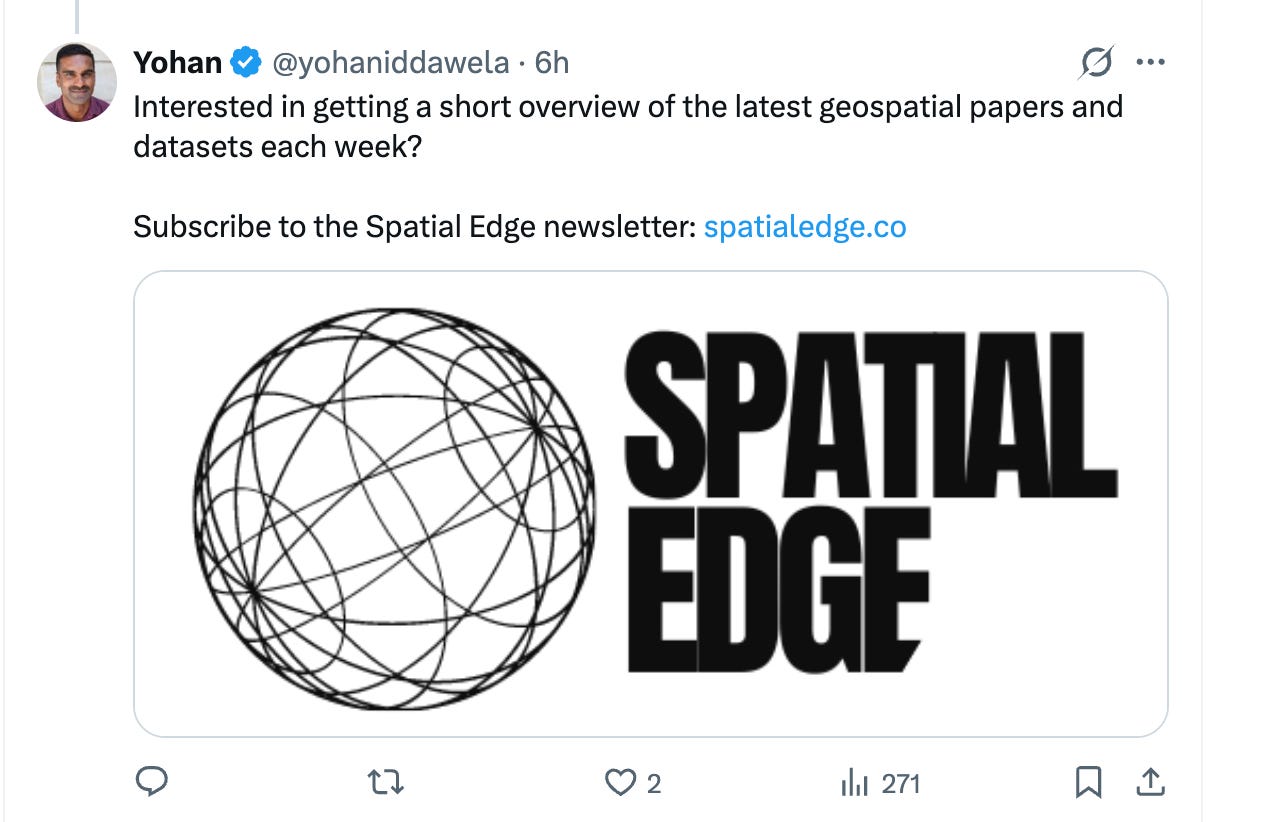
This worked remarkably well. I still do that to this day. And in fact, most of you guys reading this have discovered me through X.
When I decided to launch this newsletter, I decided I didn’t want to publish anything till I got to 200 subscribers. It took a LOT of effort to write newsletters back then - probably 1-2 days (I’ll explain how I managed to expedite the process below). I didn’t want to spend that much time writing a newsletter if only a couple of people read it.
So I told my followers on Twitter than I was about to launch a new newsletter.
I then waited for 200 people to sign up, before sending out my first newsletter.
This is the strategy I would take: start posting on the socials (X, LinkedIn, YouTube or Instagram), and then plug your newsletter.
And yes, I recognise this means you need to develop an audience on another platform first. I have a bunch of strategies/thoughts on how to do this, but for now it’s beyond the scope of this article.
Ultimately, my posting on X is mainly to get subscribers for this newsletter.
Writing on X means you need to write for engagement, retweets, etc. The room for nuance is non-existent. That’s why I much prefer Substack: I don’t need to worry about the algorithm. I can be nuanced.
3. Growing on Substack: consistency, consistency, consistency
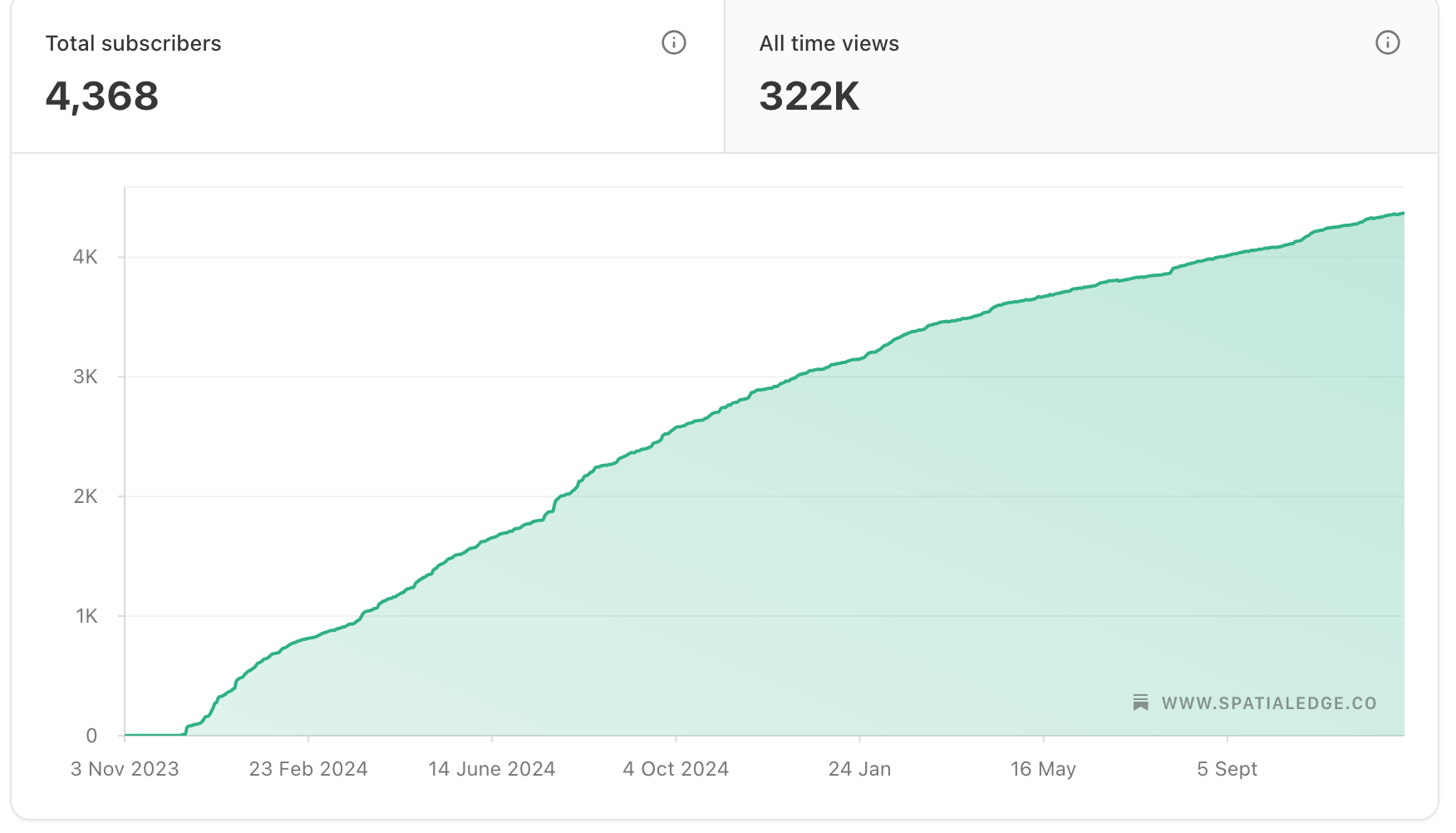
At the end of the day, you’re obviously not going to grow on Substack if you’re not posting regularly.
I’d recommend posting at least once a fortnight, but ideally once a week.
4. Writing on Substack without burning out
The question, of course, is how to post consistently without burning out.
In the early days of this newsletter, I was writing a lot of ‘think’ pieces and tutorials. This ended up taking a lot of time to do.
I needed to come up with a topic to write about, I’d then need an original take, and a lot of editing to ensure I could articulate my point concisely.
When I’d hit ‘send’ on an edition, I didn’t feel happy or relieved. Instead, I felt a sense of dread. Because I knew I had to go through this whole process for the following week’s edition.
I essentially felt like this dude:
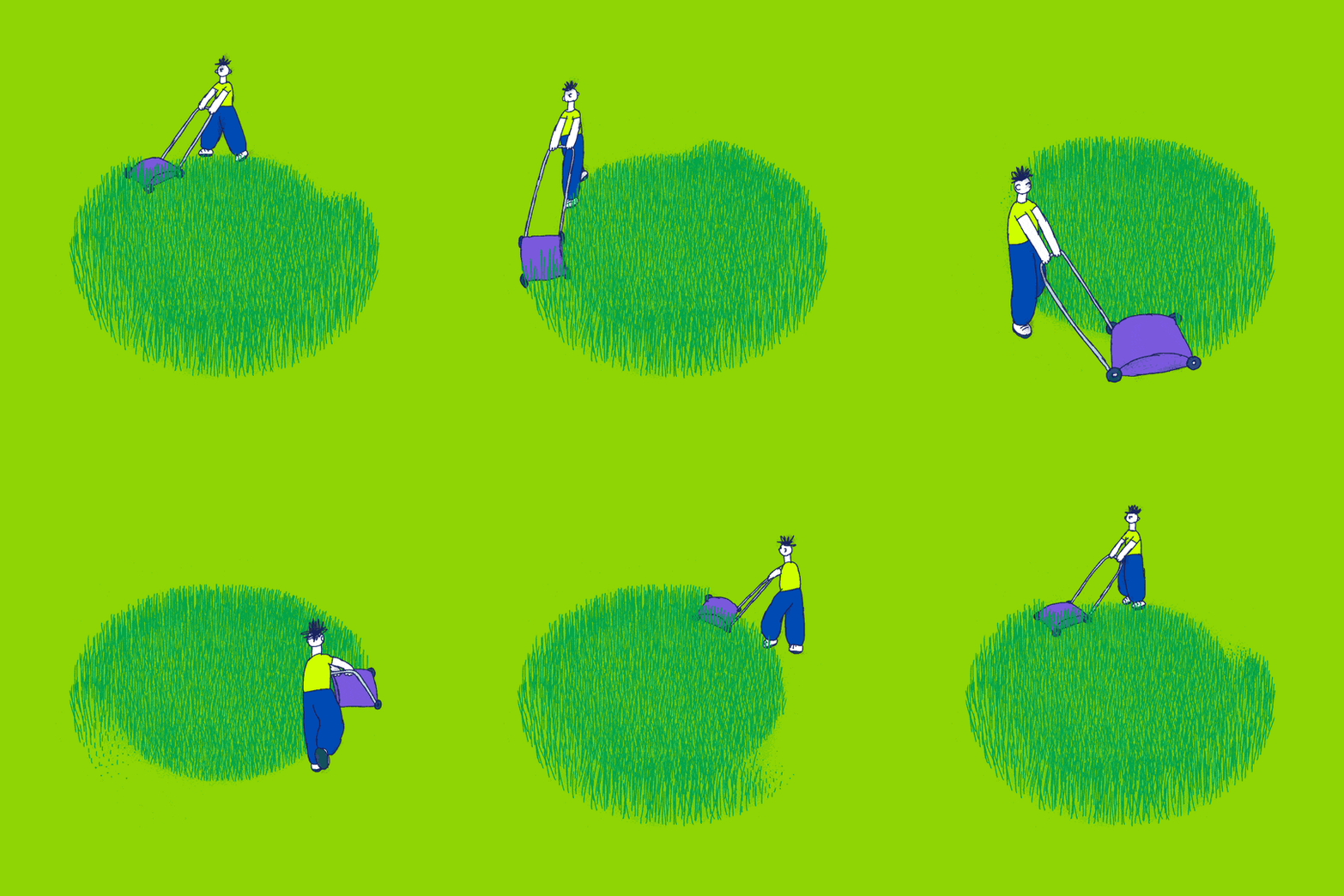
I knew I couldn’t go on like this.
So I decided to completely rebrand this newsletter into a weekly ‘round up’ of geospatial research, that could be read in roughly 5 minutes.
To do this, I came up with a structure for the newsletter:
Research you should know about
New geospatial datasets
Other interesting geospatial news
Geospatial job vacancies
Having this new templated structure was a life saver. It meant I didn’t need to constantly worry about how to write a new edition. I just needed to populate the template.
For the first several months, this took a lot of time. I’d spend numerous hours on X and LinkedIn looking for relevant things to feature.
Side note: in the early days, Twitter used to be excellent for finding geospatial papers and news. I’d curated a Twitter list with a hundred or so people who were actively discussing geospatial topics. This was probably the best way of discovering new stuff to feature.
Then, after Elon endorsed Trump, most of those people left X and migrated to BlueSky. I tried for months to use BlueSky, but it just didn’t have the same vibe as the old Twitter, so I gave up… This meant I’d lost one of the best avenues for discovering geospatial news.
Given this, I’d have to visit dozens of research journal websites to find new geospatial papers. I’d also visit a bunch of dataset websites (e.g. Zenodo, or Data Dryad) to find new datasets. This would take around half a day to one full day to compile the papers.
Again, this wasn’t sustainable, so I needed to develop a more efficient system.
5. Getting consistency through automations
As a data scientist, I knew that had to be a better way of doing things. One that helped me automate at least some of the process.
In the end, I decided to set up dozens of scrapers that would scrape relevant geospatial paper abstracts from journal websites, datasets and jobs and push them to my Slack workspace:
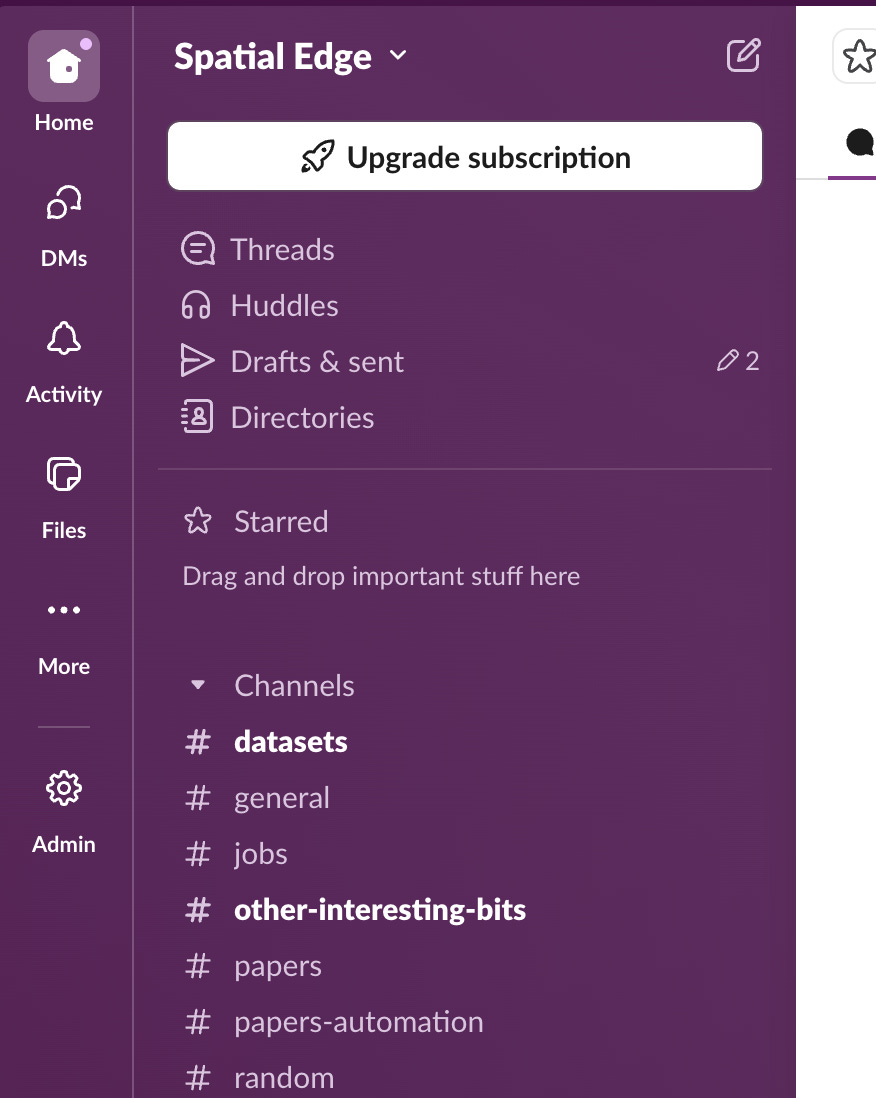
This is set to run every Monday morning. I then wake up to a hundred or so papers with their abstracts located in the #papers-automation channel:
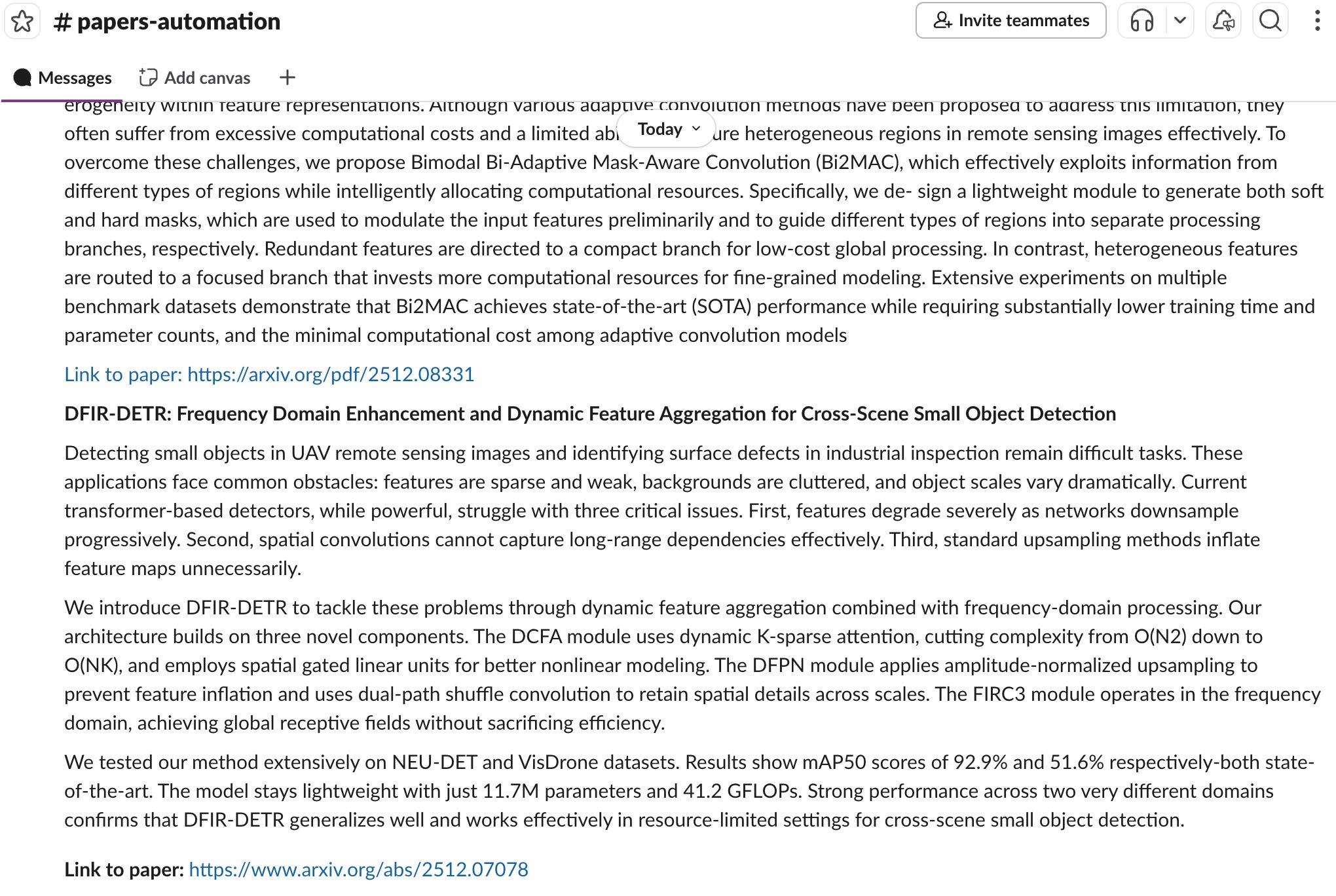
This makes it super easy for me to skim through the abstracts to find papers I find interesting. I usually select papers that are related to topics I’m working on, or which have a social science element to it (e.g. using geospatial techniques to estimate government quality, or inequality, etc.).
The bottom line is that I no longer need to visit dozens of different websites. This helps me save several hours each week.
Finally, I’m fortunate to have hired someone to help me with the newsletter. She helps me identify items for the “other interesting bits” and “jobs'“ sections, and to set up the Substack template for each week.
Having someone to help out isn’t strictly necessary, but for me, it helps reduce friction and ensure that I can stay consistent with the newsletter.
Anyway, hope all of this helps. Hit me up if you have any questions.
Merry Christmas 🎄
That’s it for this week.
I’m always keen to hear from you, so please let me know if you have:
new geospatial datasets
newly published papers
geospatial job opportunities
and I’ll do my best to showcase them here.
Yohan