


Hey guys, here’s this week’s edition of the Spatial Edge — a newsletter that’s more riveting than a Bad Bunny halftime performance. As usual, the aim is to make you a better geospatial data scientist in less than five minutes a week.
In today’s newsletter:
Spatial Mapping: ANPs improve biomass uncertainty estimates.
Image Sharpening: Synthetic data enhances hyperspectral resolution.
Landslide Detection: Deep learning improves hazard monitoring.
Malaria Threat: Climate change disrupts disease eradication.
Building Heights: New deep learning estimation dataset.
Research you should know about
1. Knowing when to doubt the data

A lot of folks use standard machine learning models like Random Forest or XGBoost to map environmental variables like aboveground biomass. These models are fantastic at making point predictions, but a new paper highlights that they are systematically overconfident when estimating uncertainty. When you use these standard baseline configurations, you end up with uncertainty estimates that fail to capture local spatial variability. For instance, if you’re mapping a landscape with sharp transitions between forests and cleared fields, traditional models generate the exact same narrow uncertainty interval they would anywhere else. They completely miss the local context. This basically means development organisations and carbon market verifiers could be making big conservation decisions using highly inaccurate confidence levels.
The researchers present Attentive Neural Processes (ANPs) as a much smarter alternative for spatial mapping. ANPs use an episodic training structure to learn spatial patterns directly, improving upon older methods that treat every observation in isolation. The model takes a sample area, splits the data, and learns to predict targets conditioned on the surrounding context. If the nearby data points are tightly clustered, the model assigns low uncertainty. If the context points are scattered and highly variable, it naturally expands its prediction intervals. The model essentially meta-learns how to adapt to local landscape heterogeneity on the fly.
The results show a massive difference between the two approaches. Across diverse forest types, the ANP consistently achieved well-calibrated uncertainty scores, whereas the traditional models fell way below expected coverage targets. When the models had to transfer their predictions to entirely new geographic regions, XGBoost coverage dropped to around 15 per cent because it simply could not adapt to the distributional shift. The ANP maintained strong coverage even as overall accuracy dipped. It is a pretty big reminder that having a model that knows when it is unsure is just as crucial as having one that makes accurate predictions.
2. Sharpening images with ‘dead leaves’

Hyperspectral imaging is awesome for identifying materials from space, but it usually suffers from a trade-off where you get rich spectral detail but poor spatial resolution. Deep learning can normally sharpen these images, but there’s a catch. There’s always a catch… These models typically need high-resolution ‘ground truth’ data to learn from, which simply doesn’t exist for most real-world scenarios. To get around this, researchers from Télécom Paris have come up with a clever unsupervised approach that relies on fully synthetic training data generated by something called the ‘dead leaves model.’
The main idea is to break the hyperspectral image down into ‘abundances’ (maps showing where specific materials are) and ‘endmembers’ (the spectral signature of those materials). The team then trains a super-resolution neural network solely on synthetic abundance maps created by simulating dead leaves falling on a canvas. While this sounds abstract, these random, overlapping shapes create statistical properties like edges and flat regions that mimic real-world abundance maps surprisingly well. This allows the network to learn how to sharpen features without ever seeing a real high-resolution image during training.
When tested on the standard ‘Urban’ dataset, this method didn’t just work; it actually outperformed state-of-the-art supervised methods like MCnet and HSISR. This is a pretty big deal because the competitors were trained on data with ground truth, while this model learned entirely from synthetic shapes. It demonstrates that we don’t always need expensive or impossible-to-acquire real-world datasets to train effective AI models. By using the dead leaves model to simulate texture and structure, the researchers provided a robust proof of concept for sharpening hyperspectral imagery in a completely unsupervised way.
3. Teaching AI to spot landslides

Landslides pose a massive threat to infrastructure in geologically unstable regions, yet our traditional methods for monitoring them (like ground surveys and visual inspections) are often too slow to be effective. To address this gap, a new paper in Scientific Reports looks into a new deep learning approach that employs enhanced Deep Convolutional Neural Networks (DCNNs) to detect landslides with high precision.
The researchers introduced several key modifications to make the system smarter. They integrated a spatial attention mechanism and attention-based Global Average Pooling, which essentially help the AI focus on the most critical parts of an image rather than getting distracted by irrelevant background noise. To further refine the training process, they utilised the Lookahead Adam optimizer and optimised learning rate schedules. These technical tweaks were designed to improve how the model extracts features and converges on a solution, ensuring it can generalise well across different types of terrain.
The performance metrics for this new approach are pretty impressive. In experiments using the Kaggle Landslide Dataset, the model achieved a testing accuracy of 95.8 per cent, with similar success observed when testing against the NASA Landslide Inventory. This level of accuracy suggests that attention-driven DCNNs could significantly outperform conventional assessment methods. By offering a reliable and efficient tool for automated monitoring, this technology could be crucial for early detection systems that help mitigate risks to communities living in danger zones. You can access the code here.
4. Climate chaos threatens malaria eradication

After decades of progress, the global fight against malaria has stalled, and climate change is emerging as a massive new hurdle. A new study in Nature has quantified this threat by looking at both the direct ecological impacts of a warmer world (like mosquito breeding rates) and the indirect, ‘disruptive’ impacts of extreme weather. By integrating 25 years of data on climate, disease burden and socioeconomic factors, the researchers project that climate change could lead to an additional 123 million malaria cases and 532,000 deaths in Africa between 2024 and 2050.
Interestingly, the study finds that it isn’t just about mosquitoes enjoying warmer weather. In fact, 79 per cent of the additional cases and 93 per cent of the extra deaths will likely be driven by extreme weather events like floods and cyclones. These disasters destroy housing, cut off access to healthcare and disrupt vector control programs, creating perfect conditions for outbreaks in areas that are already struggling. The research shows that while some regions might actually see a decrease in transmission due to excessive heat, this is far outweighed by the intensification of malaria in existing endemic zones, particularly in densely populated countries like Nigeria and Uganda.
This analysis challenges the traditional focus on ‘range expansion’, showing that 99 per cent of the additional burden will hit communities that already suffer from malaria, rather than spreading to new areas. The compounding effect of ecological changes and infrastructure disruption creates a ‘double whammy’ for vulnerable populations. To safeguard the goal of eradication, the authors argue we need to move beyond standard control measures and invest heavily in climate-resilient health systems, ensuring that clinics, supply chains and mosquito control efforts can withstand the increasingly volatile weather of the coming decades. You can access the code here.
Geospatial Datasets
1. Building height estimation dataset

M4Heights is a new benchmark dataset designed to advance building height estimation through deep learning, covering vast landscapes across Estonia, the Netherlands, and Switzerland. You can access the data here and the code here.
2. Carbon, water, and energy fluxes dataset

The Unified FLUXes (UFLUX) ensemble provides a globally consistent dataset of carbon, water, and energy fluxes, derived from a robust combination of eddy covariance data, satellite observations, and machine learning. You can check out the list of datasets here and the code here.
3. Automated crop monitoring dataset
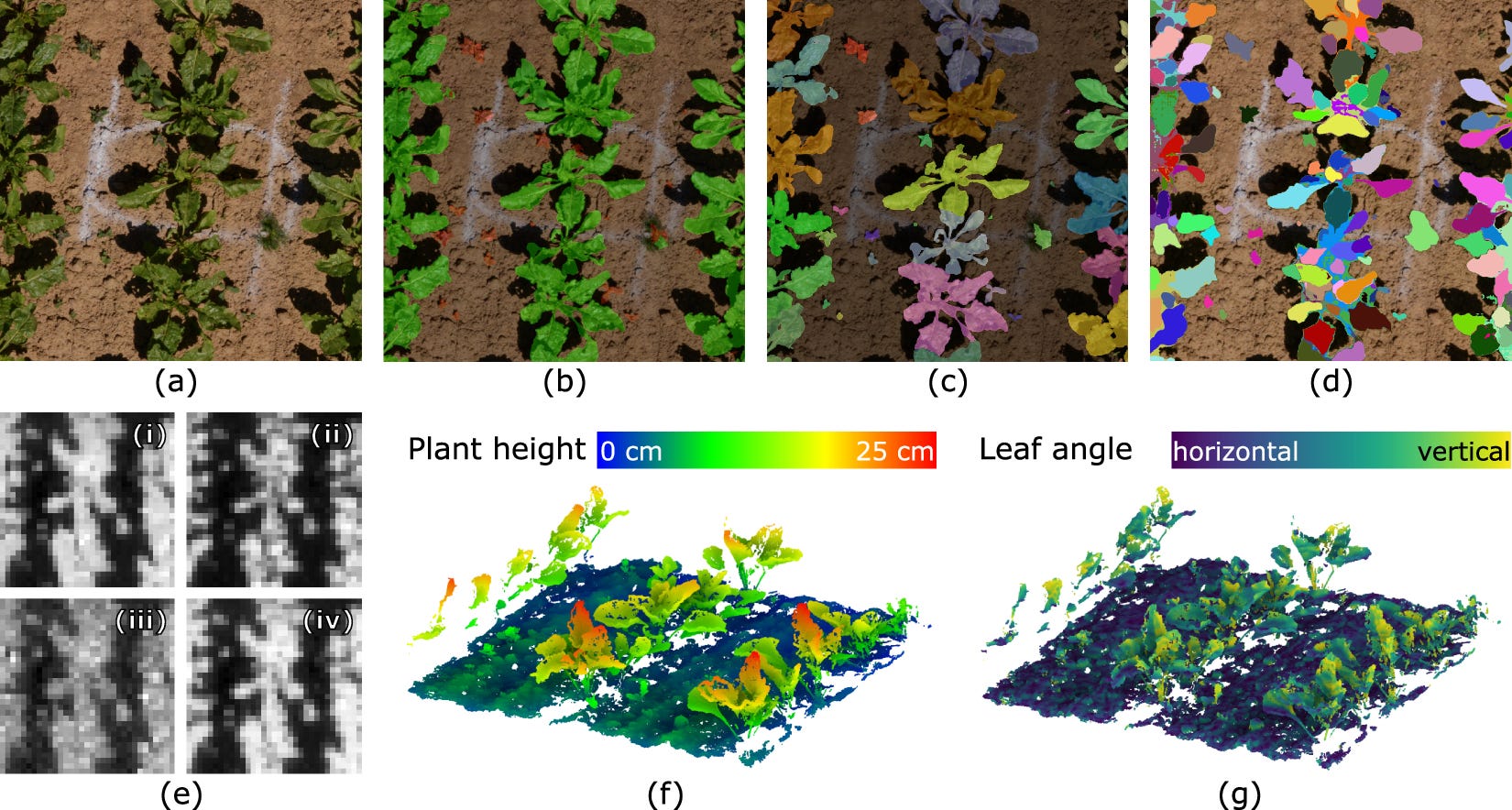
This comprehensive dataset addresses the critical need for automation in crop monitoring by providing high-quality, diverse data for six crop species (sugar beet, spring wheat, sweet corn, soybean, potato, and wheat-faba bean intercrop). You can access the data here and the code here.
4. Root zone soil moisture dataset
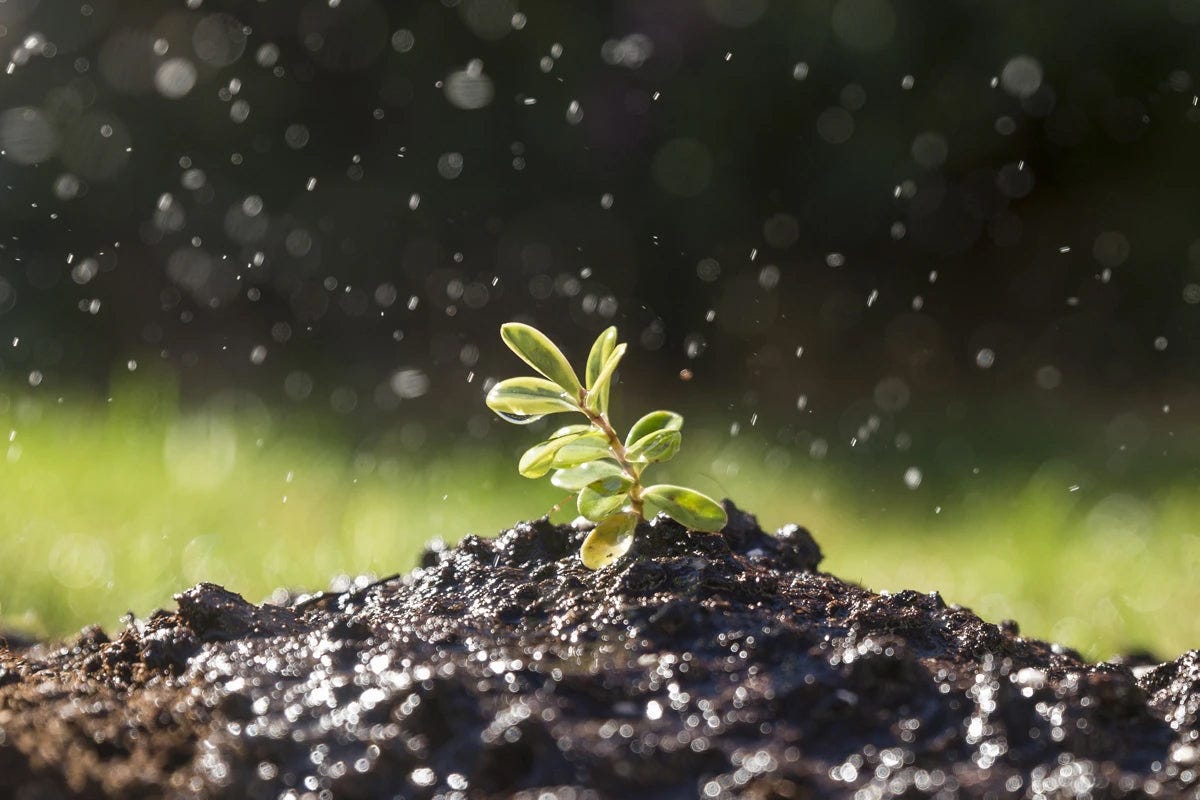
TAMSAT-SM provides a reliable, long-term dataset of root zone soil moisture across Africa, designed to support operational agricultural drought monitoring. Spanning from 1983 to the present at a 0.25° spatial resolution, it uses the JULES land surface model forced with TAMSAT rainfall and NCEP reanalysis data, tuned to satellite observations. You can access the data here and the code here (registration required).
Other useful bits

A new Earth Engine tutorial shows how to replicate this pretty awesome GOES GeoColor visualisation using Python. By blending daytime imagery with night-time city lights and infrared cloud data, this guide helps users create seamless animations that beautifully capture the transition from day to night across the winter solstice.
Planet is helping to illuminate the world's ‘dark fleets’ with their new Maritime Domain Awareness solution. By combining daily satellite imagery with AI detection, this tool tracks ships even when they switch off their AIS signals.
Google Earth is testing a new experimental feature that lets users bring their own KML, KMZ, and GeoJSON files directly onto the globe. This update makes it easier than ever to securely layer custom data over Google’s satellite imagery, helping users make smarter decisions, faster.
A new tool called GeoSpy AI is turning heads with its ability to pinpoint the exact location of a social media photo in just two seconds. It’s pretty freaky… It maps the results in full 3D, offering a powerful (if slightly unnerving) demonstration of just how much information can be gleaned from a single image.
Jobs
Development Seed is looking for a remote Technical Project Lead
FAO - Food and Agriculture Organization of the United Nations is looking for a Geospatial Data Scientist based in Rome, Italy
WHO - World Health Organization is looking for a remote Epidemic Intelligence and GIS Analyst: https://unjobs.org/vacancies/1772554525336
WFP - World Food Programme is looking for a remote Earth Observation Analyst
Just for Fun
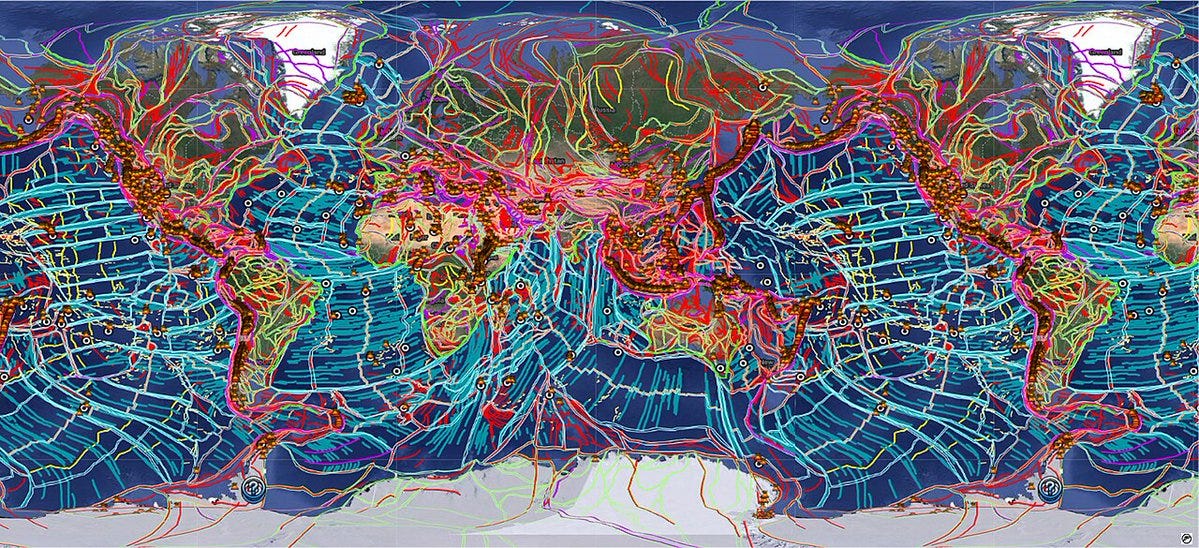
A stunning detailed map of the world’s 1,180 micro-tectonic plates.
That’s it for this week.
I’m always keen to hear from you, so please let me know if you have:
new geospatial datasets
newly published papers
geospatial job opportunities
and I’ll do my best to showcase them here.
Yohan