


Hey guys, here’s this week’s edition of the Spatial Edge — a place where you can say things like ‘cloud native’ and people nod with agreement. The aim is to make you a better geospatial data scientist in just 5 minutes a week.
In today’s newsletter:
Urban Access: Data maps the 15-minute city reality.
Heat Resilience: Better health masks rising climate risks.
Cloud Mapping: Ground cameras fix weather model blind spots.
Ecosystem Resilience: ENSO weakens our greening world.
Satellite Imaging: Sentinel-2A captures Earth in night mode.
Research you should know about
1. Mapping the reality of the 15-minute city
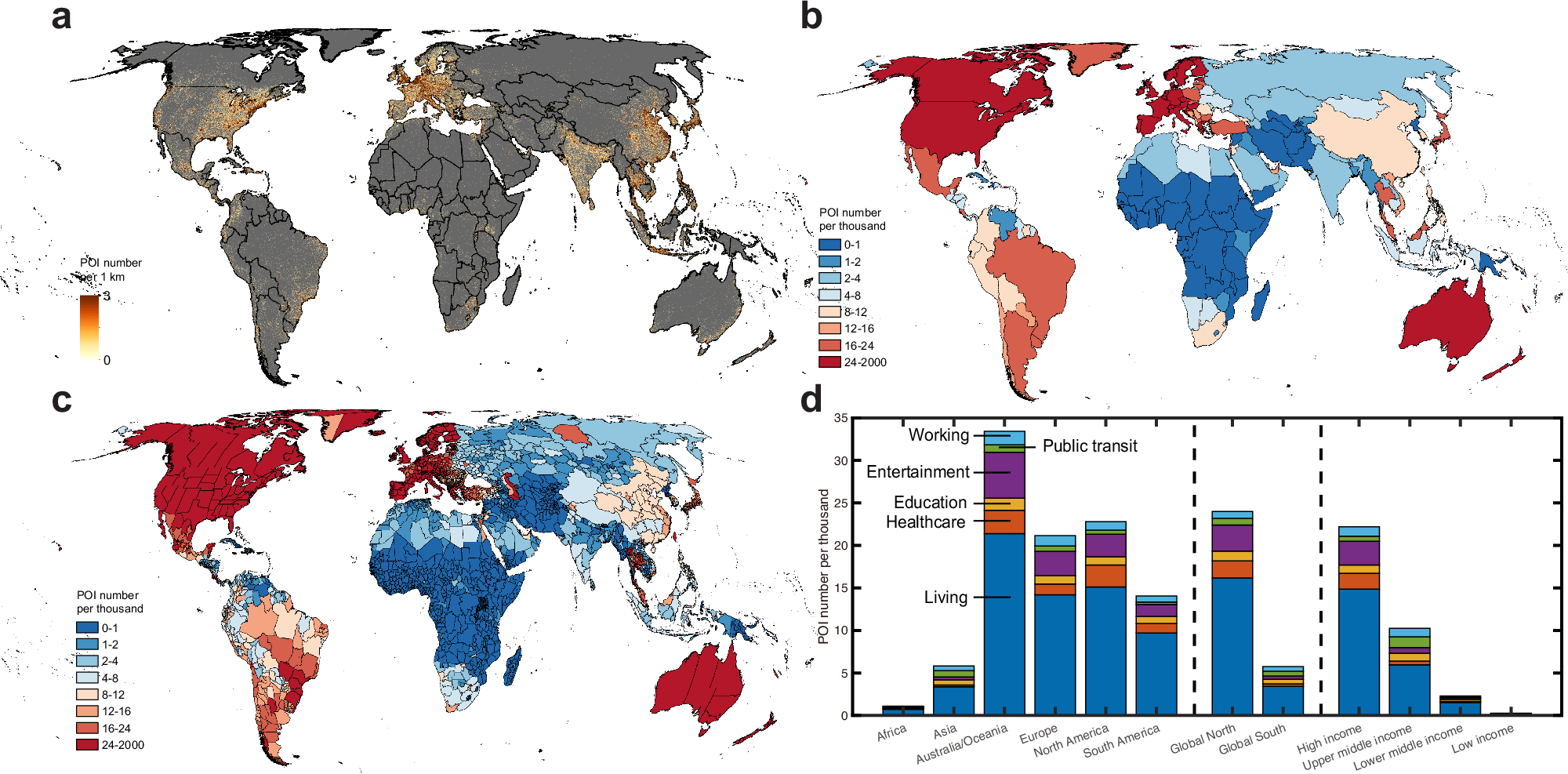
The concept of the ‘15-minute city’ has become a bit of a buzzword in urban planning, yet we’ve had surprisingly little data on how many people actually live in one on a global scale. A new study published in Nature Communications tackles this data gap by mapping global accessibility to six essential categories, including healthcare, education and public transit. By combining Overture Maps POI data with high-resolution land cover and elevation models, the researchers created a ‘friction surface’ map. This basically measures the time it takes to travel across different types of terrain to reach these services.
To pull this off, the team integrated nearly 66 million points of interest from Overture Maps and Amap (for China) with population density data. They calculated travel times using a least-cost-path algorithm, which figures out the quickest route based on terrain and road networks. The results show that roughly 62.8% of the world’s urban population currently lives within a 15-minute walk of essential amenities. If you extend that radius to a 30-minute walk, the coverage jumps to 82.5%. While these numbers might sound high, they hide some pretty stark inequalities when you break the data down by region and income level.
The data reveals a significant divide between the Global North and South. Residents in high-income nations enjoy an average travel time of 15.5 minutes to essentials, whereas those in the Global South face an average trek of 30.8 minutes. The disparity in infrastructure density is even wider, with high-income countries having nearly nine times the number of amenities per capita compared to low-income nations. This confirms that wealth heavily dictates resource allocation, and it highlights just how much work remains to achieve the UN’s Sustainable Development Goals regarding equitable access to basic services.
2. Better health is hiding the impact of heat
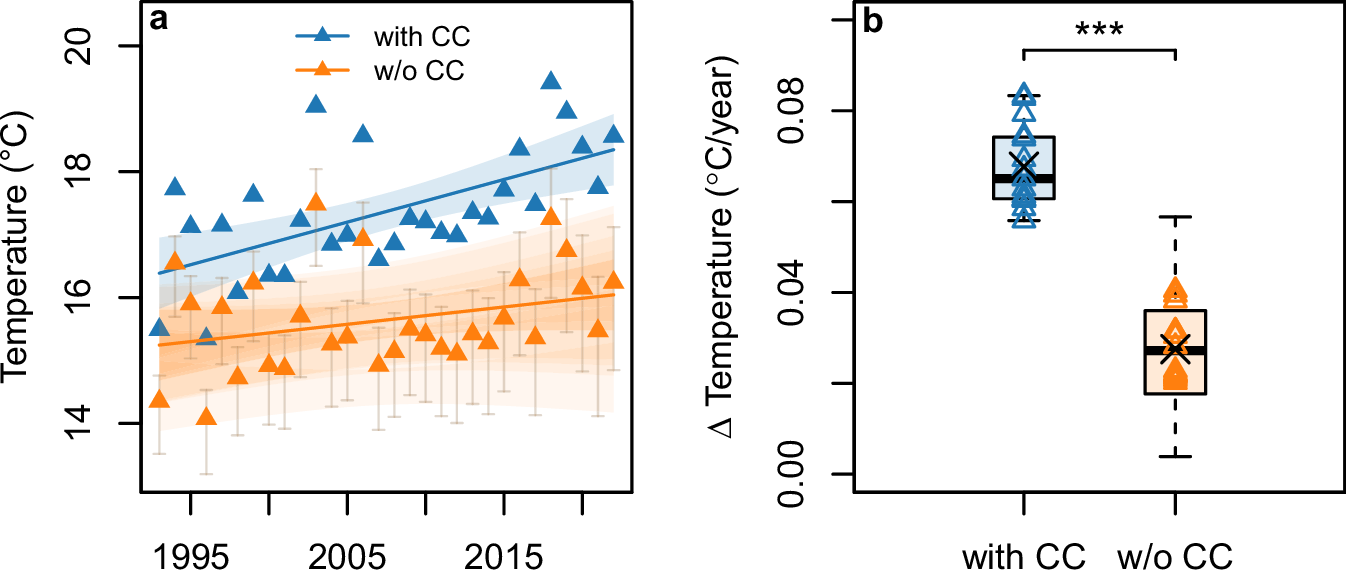
Climate change is driving up temperatures, so I would’ve expected heat-related deaths to be skyrocketing. But a new study looking at 15 major German cities between 1993 and 2022 found something unexpected. Despite the summers getting hotter, the actual number of heat-related deaths has slightly declined. The researchers discovered that this is largely down to a drop in vulnerability. Basically, improvements in life expectancy and general health have acted as a buffer, protecting the population from the worst effects of rising temperatures.
To figure this out, the team used a clever method involving ‘counterfactual’ scenarios. They crunched the numbers to see what would have happened if life expectancy had stayed stuck at 1993 levels. The results were pretty interesting. Without those improvements in health and longevity, climate change would have driven a sharp rise in heat-related deaths. It’s a bit like running up a down escalator; we are getting healthier fast enough to outpace the rising heat, at least for now.
Of course, this doesn’t mean we are off the hook. The study found that the fingerprint of climate change on the deaths that do occur is getting stronger. The proportion of heat deaths directly attributable to climate change has been rising by about 5.6% every decade. In extreme years like the 2003 heatwave, climate change was responsible for a massive chunk of the mortality burden. This suggests that while better health is masking the problem, the underlying threat from a warming climate is intensifying.
3. Ground-based cameras are fixing the blind spot in weather models
We rely heavily on weather models for everything from routing flights to predicting renewable energy output, but these models have a significant blind spot: small, shallow cumulus clouds. These clouds cover a massive portion of the Earth’s surface, yet they are too small and short-lived for standard global models to simulate directly. The usual fix involves using approximations, but these introduce errors. Getting better data is tough because high-resolution satellites might only revisit a spot every few days, and radar systems only see a tiny slice of the sky. To solve this, researchers from Oxford and Imperial College London have developed Cloud4D, a framework that uses simple ground-based cameras to reconstruct clouds in four dimensions.
The system works by using a network of six synchronised cameras pointed skyward to capture the same cloud field from different angles. It applies a ‘homography-guided’ approach, which exploits the fact that clouds naturally form in layers, to map these 2D images into a 3D structure. A transformer model then refines this data to estimate the cloud’s liquid water content on a 25-metre grid. Unlike satellite data which can be days old, this system updates every five seconds 🤯. By tracking how these 3D reconstructions move over time, the model can even calculate horizontal wind vectors at different altitudes.
During a two-month real-world deployment, the system proved to be super effective. Cloud4D delivered an order-of-magnitude improvement in space-time resolution compared to state-of-the-art satellite products. Crucially, when the team cross-referenced their results with expensive collocated radar measurements, the camera-based system maintained a relative error of less than 10 per cent. This indicates that arrays of relatively cheap cameras could be a scalable way to gather the high-frequency data needed to validate and improve the next generation of climate and weather models.
4. The hidden fragility of a greener world
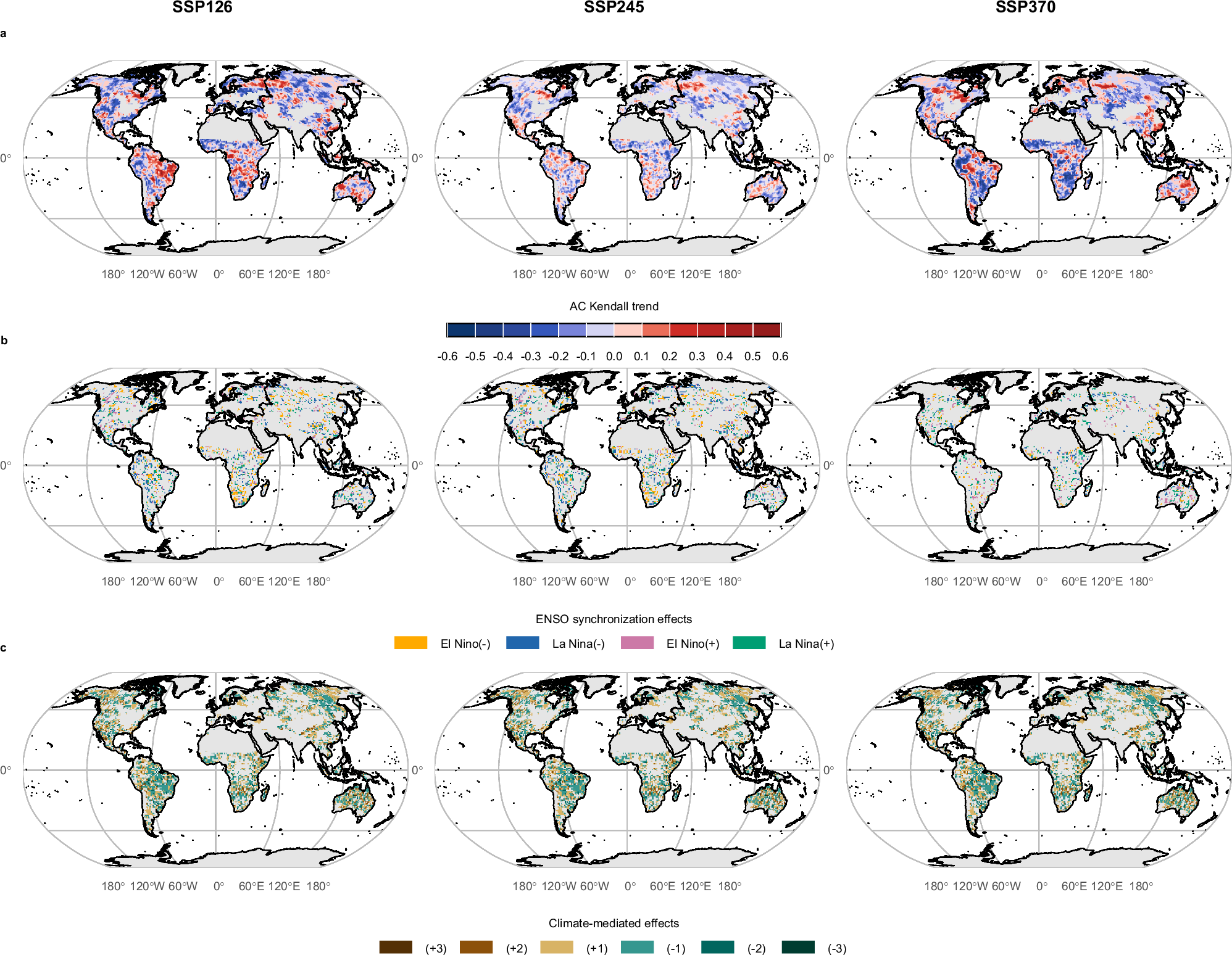
We often hear that the world is getting greener due to CO2 fertilisation, but a new study in Nature Communications suggests this greening hides a deeper problem. By analysing decades of satellite data, researchers found that while vegetation cover is increasing, its ‘resilience’ is actually dropping across over 40% of vegetated land. ‘Resilience’ is pretty much how quickly land can bounce back from a shock.
It turns out that a massive driver of this hidden instability is the El Niño-Southern Oscillation (ENSO), the major climate cycle that warms and cools the tropical Pacific. The researchers discovered that ENSO significantly impacts the resilience of 53% of the global vegetated area, meaning this single climate phenomenon is dictating the health of forests and grasslands on a massive scale.
The study breaks down exactly how ENSO messes with plants, identifying two main pathways:
‘Atmospheric synchronisation’, where large-scale air circulation patterns directly link ENSO events to plant health.
The ‘climate-mediated’ pathway, where ENSO triggers local anomalies like heatwaves, droughts or floods that stress plants out.
The researchers found that El Niño events tend to cause sharp, immediate drops in resilience due to high heat and water stress, particularly in tropical forests. La Niña isn’t harmless either, though its impacts are sneaky; they often lag behind, hitting ecosystems hard up to three years after the event starts.
Looking ahead, the situation looks likely to intensify. Using climate models to project through to 2100, the team predicts that the footprint of ENSO-driven climate anomalies will expand by another 7 to 10%. This means regions that were previously relatively safe from these tropical climate swings, such as Eastern Siberia and the northern parts of North America, are going to start feeling the pressure. This expansion suggests we can’t just rely on planting trees to solve climate issues; we need to ensure the forests we have are actually tough enough to survive the increasingly volatile pendulum of global climate cycles.
Geospatial Datasets
1. Downscaled CMIP6 simulations
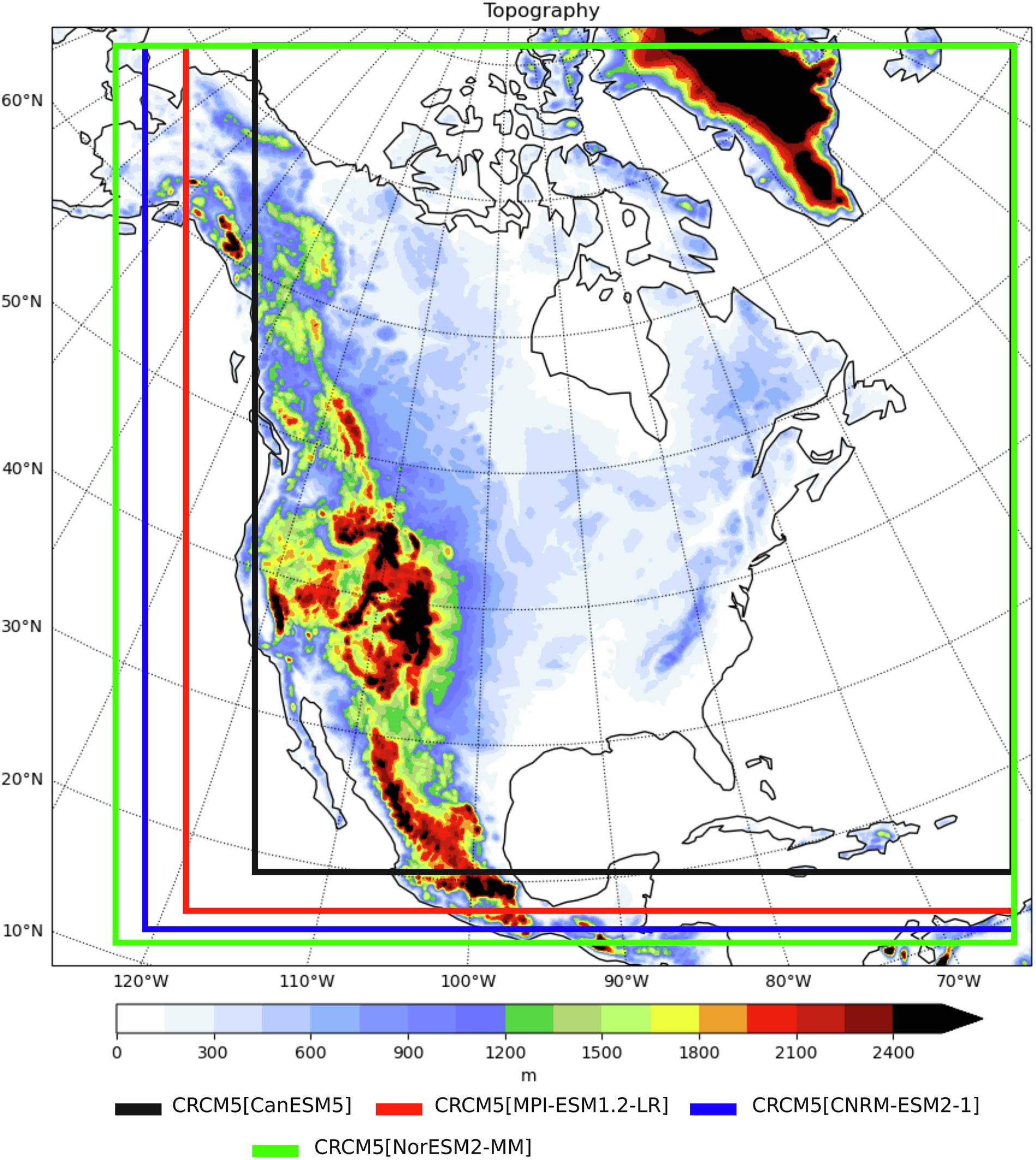
The Ouranos CRCM5-CMIP6 ensemble contributes to the NA-CORDEX initiative by providing dynamically downscaled climate simulations over North America. Driven by four global models, this project provides high-resolution 0.11° (approx. 12 km) projections spanning from 1950 to 2100 across various emission scenarios. You can access the data here and the code here.
2. Marine heatwave dataset
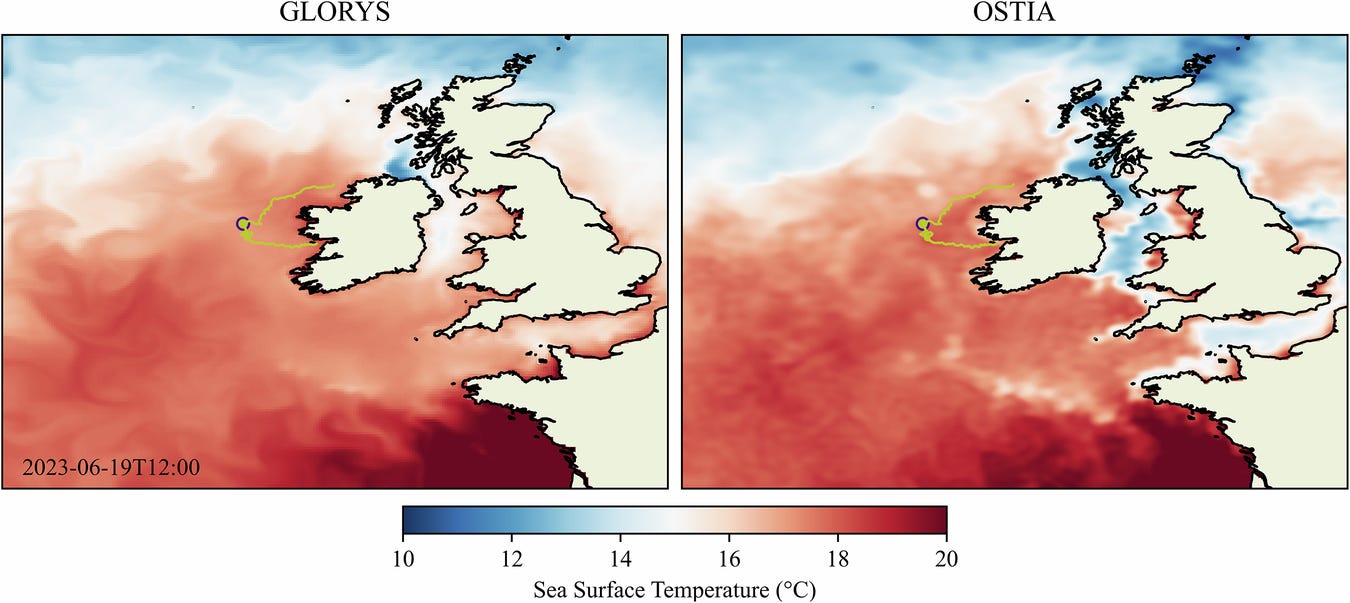
Capturing the unprecedented 2023 Marine Heatwave in the North Atlantic, this dataset features high-resolution observations from a drifting Spotter buoy off the west coast of Ireland. You can access the data here, the spectral code here, and the wind estimation tools here.
3. Shoreline change drone data
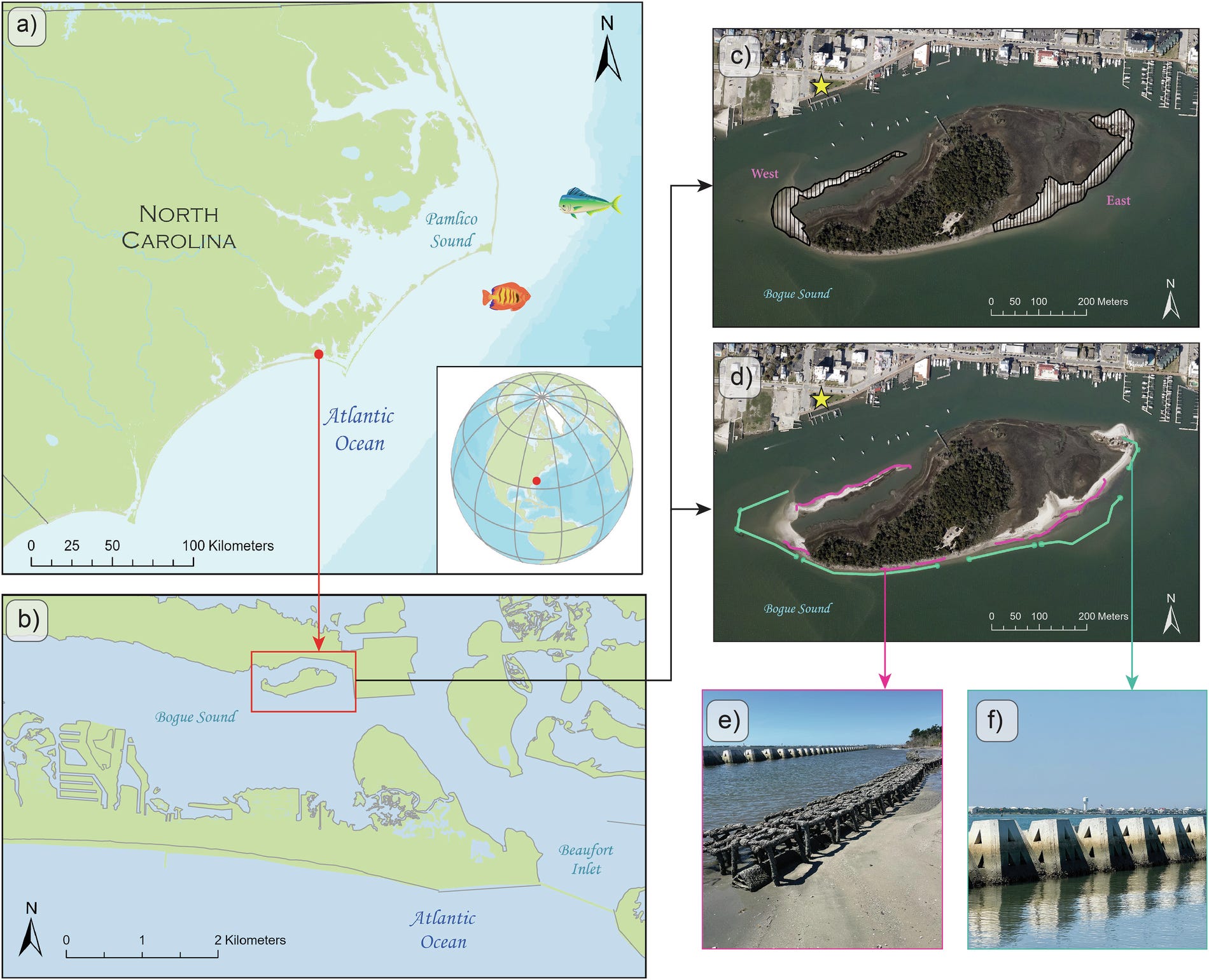
This dataset offers a seasonally structured record of shoreline change at Sugarloaf Island, North Carolina, tracking the evolution of a hybrid living shoreline project from 2023 to 2025. You can access the data here.
4. High-res CO2 and pollutant emission data
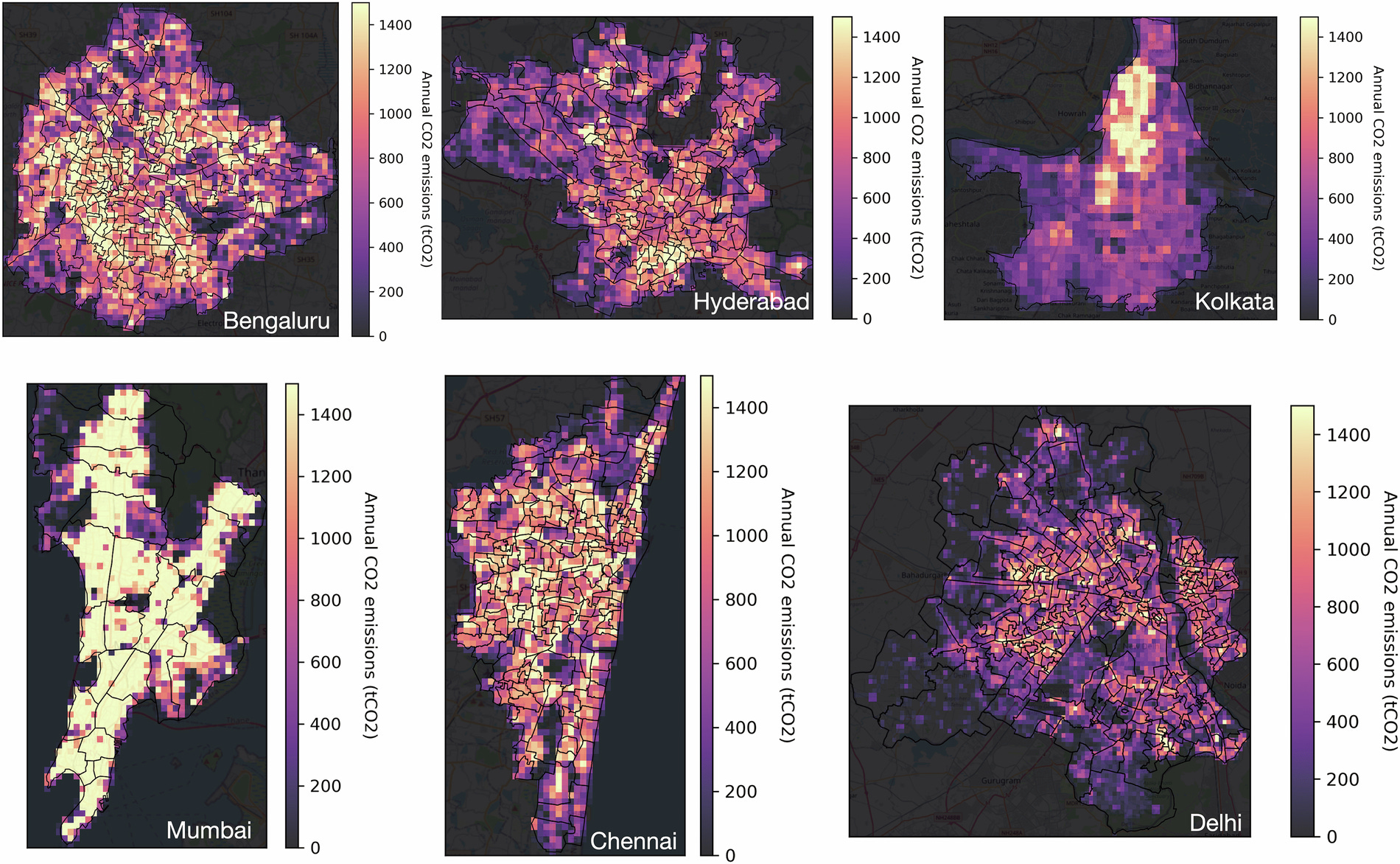
The CHETNA-Road dataset offers a vital resource for understanding urban air quality in India, delivering 500 m gridded data on CO2 and pollutant emissions across 15 major cities. You can access the data here and the code here.
Other useful bits
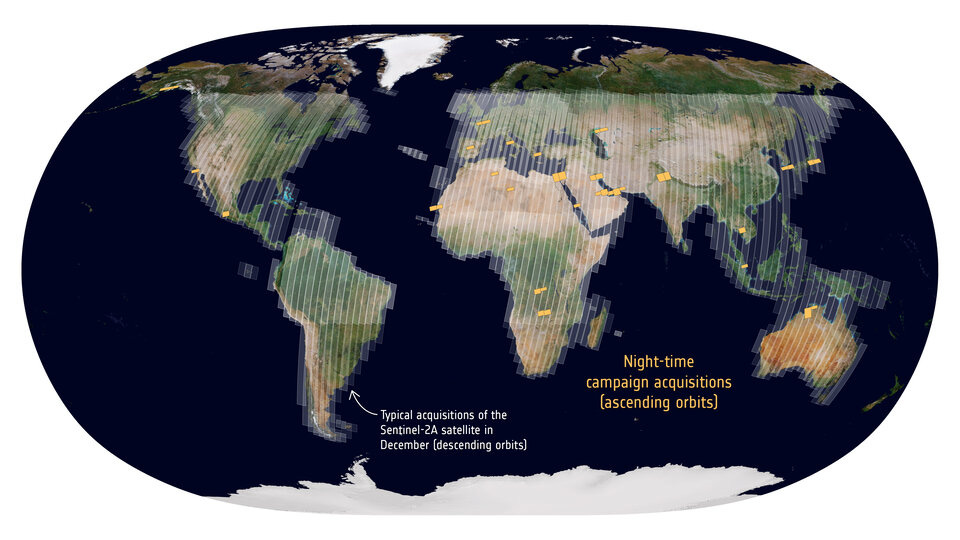
ESA has successfully switched the ten-year-old Sentinel-2A satellite into night mode, capturing unexpected views of wildfires and fishing boats. These tests are providing vital insights for the Sentinel-2 Next Generation mission, ensuring future satellites can monitor the Earth around the clock.
A new case study from Zambia highlights the power of open-source geospatial tools and free satellite data in mapping complex drought risks. By combining hazard indicators with vulnerability metrics, this report offers a practical blueprint for using accessible technology to strengthen climate resilience and early warning systems.
Globe Telecom is breaking new ground in Southeast Asia by rolling out Starlink’s Direct to Cell service for everyday mobile phones. By acting as a ‘cell tower in space’, this partnership will bring vital connectivity to remote Philippine islands and ensure a lifeline remains open when terrestrial networks fail.
2026 is shaping up to be a landmark year for space exploration, featuring everything from new flagship telescopes to historic lunar missions. With NASA’s Artemis II returning humans to the Moon’s orbit and international players like China, India, and Japan launching ambitious projects, the year promises a thrilling mix of global cooperation and competition in the cosmos.
Jobs
ICARDA - International Center for Agricultural Research in the Dry Areas is looking for a Data Scientist based in Abu Dhabi, UAE.
UNODC - Office on Drugs and Crime is looking for a Data Visualisation Consultant based in Vienna, Austria.
ESCAP - Economic and Social Commission for Asia and the Pacific is looking for an Intern - Economic Affairs based in Bangkok, Thailand
Just for Fun
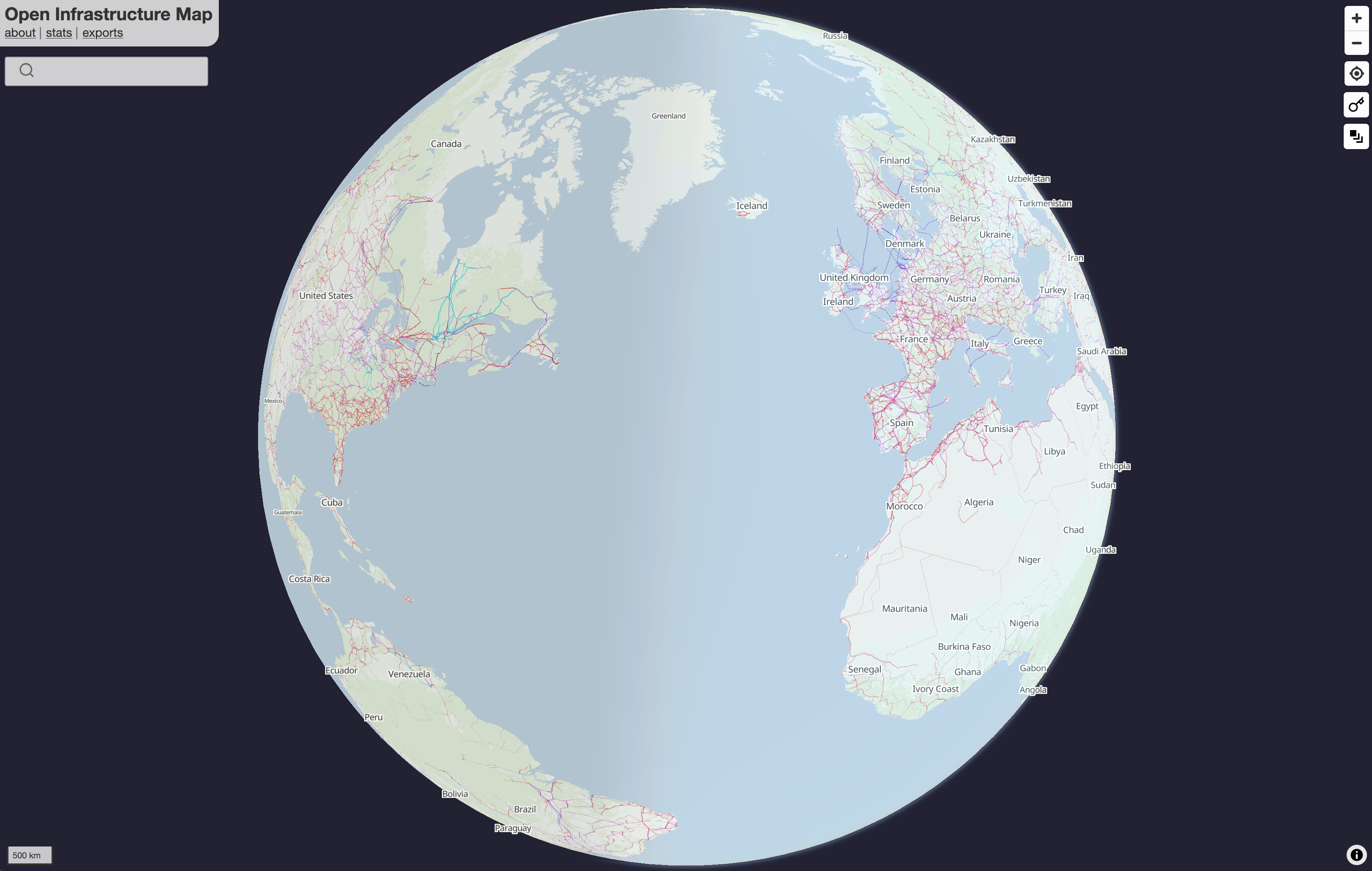
Open Infrastructure Map reveals the hidden skeleton of our world, visualising the power lines and telecom networks that are usually invisible on the standard OpenStreetMap. It’s a pretty interesting open-source project that brings these global layers to light for everyone to explore.
That’s it for this week.
I’m always keen to hear from you, so please let me know if you have:
new geospatial datasets
newly published papers
geospatial job opportunities
and I’ll do my best to showcase them here.
Yohan